



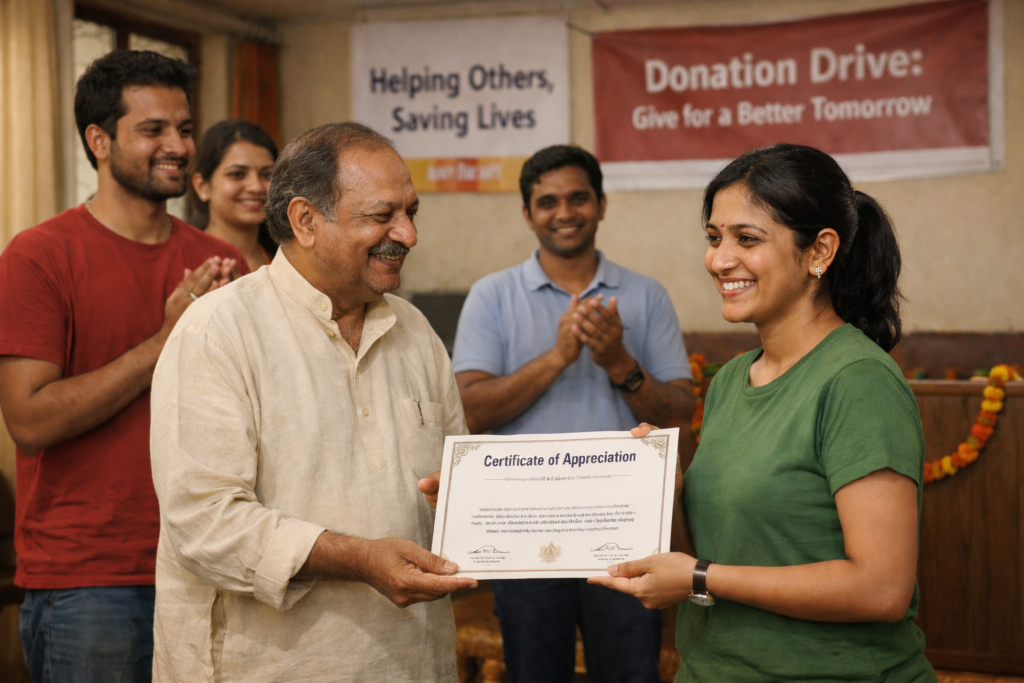
A certificate for volunteers plays a powerful role in recognizing selfless efforts and inspiring continued service. From social drives to donation campaigns, volunteers form the backbone of meaningful change, and acknowledging their contribution strengthens appreciation for donation work, building trust, pride, and motivation from the very beginning.
Volunteering is driven by compassion, not rewards. Yet, appreciation matters. When people give their time and energy to donation-related causes, a simple but thoughtful form of recognition can strengthen their commitment. This is where structured acknowledgment becomes valuable, especially in community-based initiatives.
Table of Contents
Certificate for Volunteers as a Symbol of Recognition
A certificate for volunteers is more than a printed document. It is a symbol that says someone’s time mattered. It shows that their effort was noticed and valued by the organization and the community they served.
In donation work, volunteers often operate behind the scenes. They organize camps, guide donors, manage logistics, and spread awareness. Formal recognition gives visibility to these unseen efforts and respectfully reinforces appreciation for donation work.
Emotional Impact on Volunteers
Recognition has a strong emotional effect. When volunteers receive formal acknowledgment, they feel respected and connected to the cause. This emotional bond increases loyalty and encourages them to stay involved longer.
For many individuals, volunteering is personal. It aligns with their values and sense of responsibility. Acknowledging this dedication boosts morale and validates their choice to serve society selflessly.
Building Trust and Credibility
Issuing formal recognition also builds credibility for the organization. It shows that the system values transparency, structure, and people. Volunteers feel confident associating their name with such initiatives.
For donation-focused efforts, credibility is essential. Trust encourages more participation, smoother coordination, and stronger community relationships. LifeSaverArmy understands the importance of ethical recognition without commercial influence.
Encouraging Long-Term Engagement
Volunteer retention is often a challenge. Many people start enthusiastically but drift away due to a lack of acknowledgment. Recognition creates a sense of belonging and motivates volunteers to stay connected.
When volunteers know their contribution will be remembered and appreciated, they are more likely to return, take responsibility, and even inspire others to join donation-related activities.
Professional and Personal Value
Recognition like this adds real value to a volunteer’s personal and professional journey. It can support resumes, college applications, and job interviews, especially for young contributors.
Beyond career benefits, it also strengthens personal confidence. Volunteers feel proud sharing proof of their contribution, reinforcing a positive self-image rooted in service and empathy.
Role in Appreciation for Donation Work
Donation work demands consistency, patience, and responsibility. Recognition highlights the seriousness of these efforts. It shows that volunteering is not casual help but a meaningful social contribution.
Recognition builds a culture of gratitude. When one volunteer is recognized, others feel encouraged. This ripple effect strengthens the entire support system around life-saving initiatives.
Strengthening Community Culture
Recognition nurtures a healthy community culture. It promotes respect, unity, and shared purpose. Volunteers feel part of something larger than themselves.
Communities supported by LifeSaverArmy thrive because people feel valued. Structured appreciation transforms individual efforts into collective impact.
10 Pro Tips for Meaningful Volunteer Certificates
- Clearly mention the volunteer’s role and contribution.
- Use simple, respectful language that feels personal.
- Add the date and duration of service for clarity.
- Keep the design clean and dignified.
- Ensure names and details are accurate.
- Present certificates publicly when possible.
- Pair certificates with verbal appreciation.
- Issue them promptly after the activity.
- Maintain consistency in format and tone.
- Store records to acknowledge long-term contributors.
These steps ensure recognition feels genuine, not routine.
Why Recognition Creates Lasting Social Impact
Recognition strengthens the emotional bond between volunteers and the cause they support. When people feel appreciated, they are more likely to act responsibly, remain consistent, and encourage ethical behavior within the group. This sense of respect creates positive habits that extend beyond a single event
In donation-driven initiatives, appreciation helps reduce volunteer burnout. Many contributors balance personal life, work, and social service. Acknowledging their effort reassures them that their time was meaningful and well spent.
FAQs
1. Why is a certificate for volunteers important?
It acknowledges effort and time given freely while making volunteers feel valued and respected. It builds an emotional connection with the cause and motivates people to stay involved. Such recognition also strengthens trust between volunteers and the organization. Overall, it creates a positive and supportive volunteering experience.
2. How does recognition affect volunteer motivation?
Recognition makes volunteers feel appreciated for their contribution. It increases confidence and personal satisfaction, which encourages them to stay active. When efforts are acknowledged, people are more likely to commit to long-term goals. It also inspires others to take part in similar initiatives.
3. Can certificates support personal growth?
Yes, certificates help boost self-esteem and a sense of pride. They validate social responsibility and meaningful participation. Volunteers can reflect on the impact they have made through service. This often encourages the habit of continued community involvement.
4. Is formal appreciation necessary for donation work?
Donation work carries responsibility and emotional effort, so appreciation is essential. It reinforces ethical contribution and respect for the cause. Formal recognition highlights the seriousness of the work involved and strengthens appreciation for donation work. It also helps build a culture where service is truly valued.
5. How can organizations improve volunteer retention?
Organizations can enhance employee retention by providing timely and genuine recognition. Clear communication of appreciation makes volunteers feel connected. Creating a supportive and respectful environment matters greatly. Valuing every contribution equally helps maintain long-term engagement.
Conclusion
Recognition is not about rewards but respect. A certificate for volunteers acknowledges dedication, strengthens emotional bonds, and builds a culture of appreciation for donation work. It motivates individuals, enhances credibility, and encourages long-term engagement. When volunteers feel seen and valued, communities grow stronger and life-saving missions become sustainable.LifeSaverArmy demonstrates how thoughtful recognition can amplify impact without losing the human touch.
