



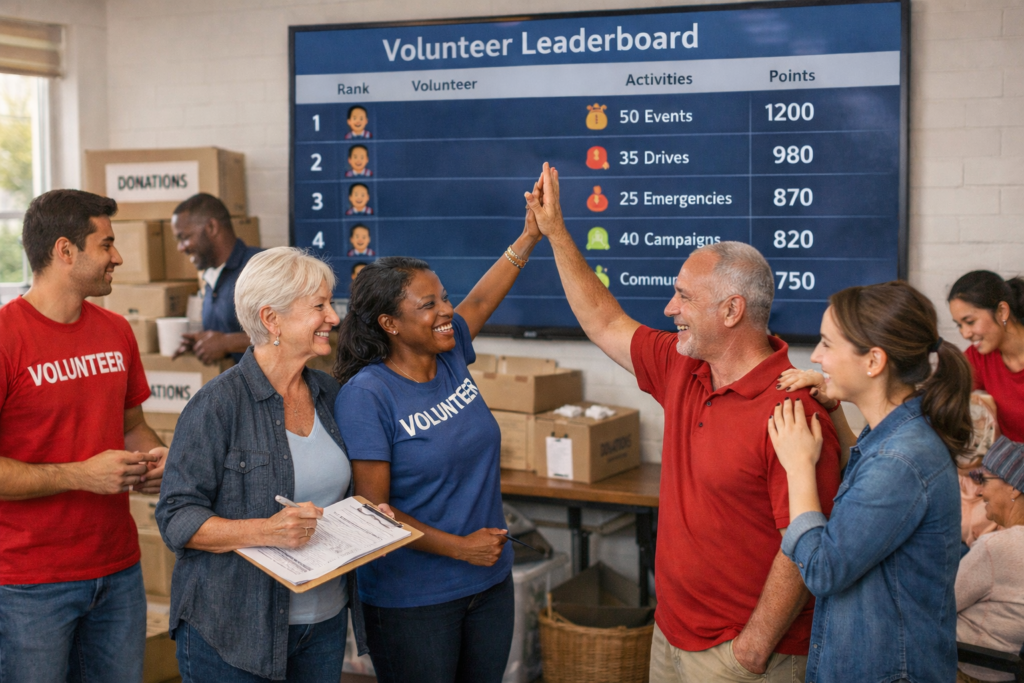
A is more than a ranking list. It is a transparent system that tracks participation, consistency, and volunteer Leaderboard and its impact. It allows organisations to acknowledge contributions without unhealthy competition, while still inspiring volunteers to stay active.
Such leaderboards often measure activities like event participation, donor coordination, awareness campaigns, emergency responses, and community outreach, helping organisations recognise volunteer efforts accurately. When designed thoughtfully, they promote fairness and encourage teamwork rather than rivalry.
For volunteers, seeing their name on a leaderboard builds confidence. For organisations, it helps identify reliable contributors and future leaders. For the community, it creates trust and accountability.
Table of Contents
Why Tracking Volunteer Activity Matters in a Volunteer Leaderboard
Volunteer activity is the backbone of many life-saving and community support initiatives. Without proper systems to recognise volunteer efforts, contributions often go unnoticed, leading to burnout and disengagement.
Tracking activity helps organisations understand which programs are working, where support is strongest, and which areas need improvement. It also allows for timely appreciation, which is essential to consistently recognizing volunteer efforts.
On LifeSaverArmy, activity tracking helps ensure that active volunteers are acknowledged for their time, responsiveness, and commitment to helping patients and families during critical moments.
Celebrating Achievements Builds Long-Term Engagement
Recognition is not about rewards alone. It is about respect. When achievements are visible, volunteers feel a deeper connection to a larger purpose.
Achievements can include milestones like completing a certain number of drives, assisting patients during emergencies, or educating new donors. Public acknowledgment through structured systems builds pride and encourages others to participate more actively.
By highlighting achievements, organisations create role models within their volunteer community. This naturally strengthens teamwork and builds a culture of service.
Digital Platforms and Transparent Recognition
Modern volunteer programs rely on digital tools to manage data and communication. Transparent systems help avoid bias and ensure fairness.
A clear recognition framework enables volunteers to understand how their efforts are valued and acknowledged. This clarity builds trust and reduces misunderstandings.
LifeSaverArmy focuses on transparency by showcasing verified volunteer contributions and ensuring recognition aligns with real-world impact. This approach helps recognise volunteer efforts without exaggeration or favoritism.
How Leaderboards Support Community Trust
Communities rely on volunteers during emergencies. A visible record of active volunteers reassures people that help is available and organised. When individuals can see consistent participation and verified contributions, it reduces uncertainty during critical moments.
Leaderboards demonstrate accountability. They show that volunteers are not anonymous, but part of a structured network committed to service. This transparency helps authorities, hospitals, and families feel confident when requesting or offering help.
Leaderboards also create a sense of reliability. Repeated names and steady participation signal experience and dedication. This builds confidence that responses will be timely and responsible.
When communities trust the system, participation increases naturally, leading to better preparedness, stronger coordination, and faster response times during emergencies and daily support needs.
10 Pro Tips to Build an Effective Volunteer Recognition System
- Define clear criteria
Decide what actions count as meaningful contributions. Focus on quality and consistency, not just numbers. - Update regularly
Outdated data reduces credibility. Keep activity records current to maintain trust. - Avoid unhealthy competition
Encourage collaboration by highlighting collective impact alongside individual efforts. - Recognise different roles
Not all contributions are visible. Include planning, coordination, and awareness work. - Keep it simple
Complex systems confuse volunteers. Clear metrics improve participation. - Celebrate milestones publicly
Small achievements matter. Regular appreciation keeps motivation high. - Ensure data accuracy
Verify activities before recognition to maintain fairness. - Invite volunteer feedback
Allow volunteers to suggest improvements to the recognition system. - Link recognition to purpose
Always connect achievements to the lives impacted, not just scores. - Promote values, not just ranks
Highlight compassion, reliability, and teamwork alongside performance.
Ethical Recognition Without Commercial Pressure
Recognition should never feel transactional. Volunteers give time out of care, not for rewards alone.
Ethical recognition focuses on appreciation, respect, and shared mission. Avoid material incentives that shift focus away from service values.
LifeSaverArmy follows this principle by highlighting contributions respectfully, keeping the focus on saving lives and supporting patients.
FAQs
1. How does a Volunteer Leaderboard help volunteers stay motivated?
It gives visibility to consistent efforts and shows that time and dedication matter. Volunteers feel valued when their work is acknowledged openly.
This sense of recognition strengthens commitment. It also inspires others to participate more actively.
2. Why is recognising volunteer efforts important?
Recognition builds trust and emotional connection. Volunteers feel respected and understood.
It reduces burnout and encourages long-term involvement. Appreciation strengthens community bonds.
3. Can leaderboards reduce volunteer dropouts?
Yes, when used correctly. Clear appreciation helps recognise volunteer efforts and reduces feelings of being overlooked.
Volunteers stay engaged when they see progress. Consistent acknowledgment supports retention.
4. How can organisations ensure fairness in recognition?
By setting transparent criteria and verifying activities. Consistency is key.
Regular reviews help avoid bias. Open communication builds trust.
5. What role do digital platforms play in volunteer recognition?
They help track activity accurately and share updates quickly. Digital systems improve transparency.
They also make recognition accessible to everyone. This strengthens overall coordination.
Conclusion
A well-designed Volunteer Leaderboard highlights real volunteer activity and meaningful achievements without creating pressure or comparison. It supports transparency, builds trust, and helps recognise volunteer efforts respectfully.
By tracking contributions, celebrating milestones, and using ethical recognition practices, organisations can strengthen volunteer engagement and community impact. LifeSaverArmy demonstrates how thoughtful recognition systems can support life-saving missions while keeping humanity at the center of service.
When volunteers feel seen and valued, communities become stronger, more responsive, and better prepared to help those in need.
