



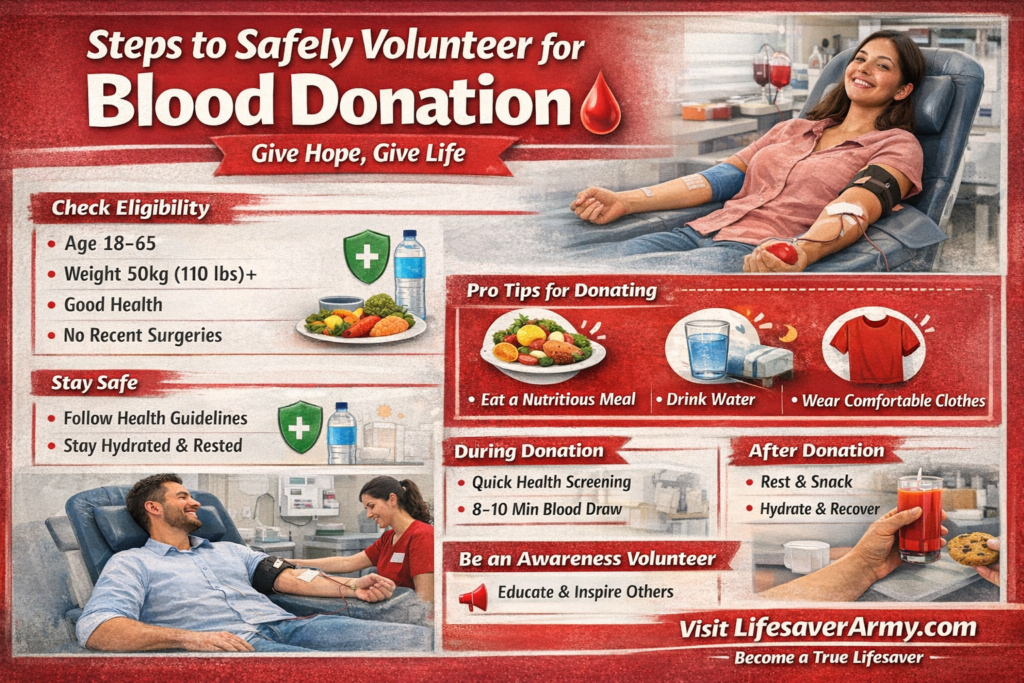
The very first step to make a life-saving difference is to volunteer for blood donation. Every drop you give carries the power to save someone in need. Whether it’s for accident victims, patients undergoing surgery, or those battling constant health issues, your contribution can be the reason someone gets another chance at life. In this blog, we will walk you through the safe steps, best practices, and tips to ensure your experience is smooth, positive, and impactful. Along the way, we will also highlight the importance of being a blood donation awareness volunteer, because spreading knowledge is just as powerful as donating itself.
Table of Contents
Why Safety Matters in Blood Donation
Donating blood is one of the most generous acts a person can perform, but safety is key. Both donors and recipients depend on safe practices to ensure a healthy and beneficial outcome. Following the right guidelines reduces risks such as fatigue, dehydration, or infection.
Learning about the precautions in place will give you confidence when you choose to volunteer.
Eligibility Before You Volunteer for Blood Donation
Not everyone is eligible to donate blood at all times. Before stepping forward, it’s important to check:
- Age: Typically between 18 and 65.
- Weight: Usually at least 50 kg (110 lbs).
- Health: Free of infections, flu, or recent surgeries.
- Medications: Some medications may temporarily prevent donation.
- Lifestyle: Adequate sleep, balanced meals, and no alcohol 24 hours prior.
These guidelines exist to protect both you and the patient receiving your blood.
Preparing to Be a Blood Donation Awareness Volunteer
Beyond donating, you can also serve as a blood donation awareness volunteer. Sharing facts, supporting others, and helping organize drives creates a bigger impact. Many people doubt out of fear or misinformation. By providing clarity, you help increase donor turnout and inspire others to give safely.
10 Pro Tips for Safe and Confident Blood Donation
Here are ten actionable tips to help you stay safe and confident:
1. Eat a Nutritious Meal
Consume iron-rich foods such as leafy greens, beans, or lean meats before your appointment. A balanced meal prevents dizziness and keeps your energy steady.
2. Stay Hydrated
Drink at least 2–3 glasses of water before donating. Hydration makes veins easier to locate and reduces the chance of passing out
3. Get Sufficient Rest
Sleep for at least 7–8 hours the night before. A well-rested body handles the process more smoothly.
4. Avoid Alcohol and Heavy Exercise
Skip alcohol 24 hours before donating, and avoid hard exercise before and right after. This ensures your body’s liquids remain balanced.
5. Wear Comfortable Clothing
Choose loose sleeves or short-sleeved shirts. It makes the process easier for you and the medical staff.
6. Share Truthful Medical History
Always be transparent about your medications, surgeries, or recent travels. This keeps the blood supply safe and ensures your donation is accepted.
7. Relax During the Procedure
Tension can cause discomfort. Breathe deeply, chat with staff, or focus on a calming thought to ease nerves.
8. Follow Aftercare Instructions
Apply pressure to the site for the recommended time, avoid lifting heavy objects, and rest for a while afterward.
9. Snack and Rehydrate After Donation
Most centers provide juice and snacks. This restores your sugar levels and helps you recover quickly.
10. Plan Your Next Donation
Typically, you can donate whole blood every 8–12 weeks. Mark your calendar to keep your lifesaving habit consistent.
Steps During and After Donation
When you volunteer, here’s what you can expect:
- Registration: Provide your ID, answer medical questions, and undergo a quick health screening.
- Donation Process: A sterile needle is used, and the actual blood draw takes about 8–10 minutes.
- Recovery Area: You’ll be guided to rest for 10–15 minutes with snacks provided.
- Post-Donation Care: Continue hydrating, avoid strenuous activities, and monitor the site for any swelling or discomfort.
These simple steps help ensure your well-being while making a difference for others.
FAQs
1. How often can I volunteer for blood donation?
You can donate whole blood every 8–12 weeks, depending on your health and local guidelines. Blood fluid and platelets may have different intervals. Always consult the donation center for personalized advice.
2. What should I eat before donating blood?
Eat a balanced meal rich in iron and vitamins. Avoid fatty foods, as they may affect the testing of your blood. Fruits, vegetables, and lean proteins are the best choices.
3. Can I donate if I am on medication?
It depends on the type of medication. Some medicines may temporarily disqualify you, while others may not affect fitness. Always inform the staff honestly about your prescriptions.
4. What if I feel weak after donating?
Feeling a little tired is normal. Rest, drink fluids, and eat snacks. If weakness persists for more than a day, consult a healthcare professional.
5. How do I support others to donate?
Share your positive experience and promote the role of a blood donation awareness volunteer. Educate others about the need for blood and encourage them to join trusted lifesaverarmy.com.
Conclusion
Choosing to volunteer for blood donation is one of the most impactful acts of kindness. By following safety measures, preparing properly, and educating others, you ensure that your efforts create lasting value.
We covered fitness requirements, safe preparation, a detailed 10-tip guide, and aftercare steps. Alongside donating, stepping up as a blood donation awareness volunteer helps spread knowledge and encourages more lifesavers to join. When you give blood, you give hope, strength, and life itself. If you are ready to start, visit lifesaverarmy.com today and take the step toward becoming a true lifesaver.
