



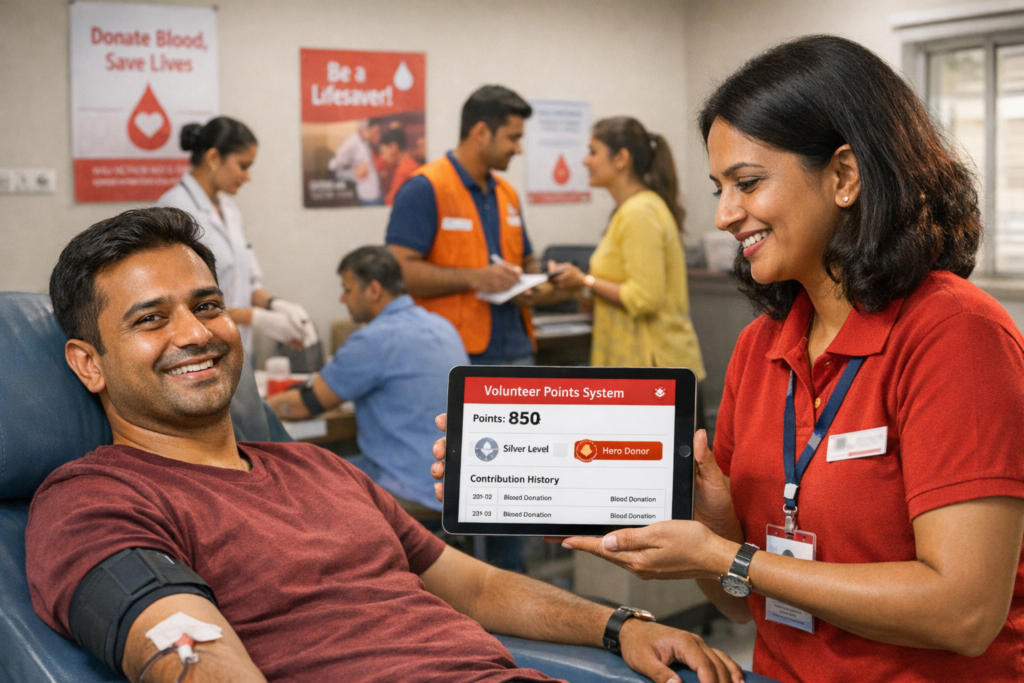
The volunteer points system is becoming a powerful way to recognize, track, and encourage meaningful community service. In social impact platforms, especially those connected to lifesaving efforts, recognition plays a major role in keeping volunteers active and motivated. People want to know that their time, effort, and commitment truly matter.
Volunteering is driven by compassion, but structure helps turn goodwill into long-term action, especially for blood donation contributors. When volunteers can clearly see their progress, contribution level, and social impact, they are more likely to stay involved. This is where a transparent points-based approach creates value for both volunteers and organizers.
In this article, we will explore how a structured volunteer points model works, why it matters for community service, and how LifeSaverArmy uses it to build trust, consistency, and motivation.
Table of Contents
Volunteer Points System Explained Simply
A volunteer points system is a structured method that assigns points to volunteers based on their verified actions. These actions may include donating blood, organizing donation camps, helping with awareness drives, or supporting emergency requests.
Points are awarded only after verification, which ensures fairness for blood donation contributors. Each contribution holds value, whether it is a first-time donation or long-term service. Over time, these points reflect commitment and help build a volunteer profile that shows reliability and real impact.
Why Recognition Matters in Volunteering
Many volunteers stop participating not because they lose interest, but because they feel unnoticed. Recognition is not about competition. It is about appreciation and clarity.
When volunteers see progress through points, they feel encouraged. This sense of progress builds confidence and creates a habit of regular contribution. Recognition also builds trust within the community, as verified records show who is actively helping during critical times.
A points-based approach brings transparency. Everyone understands how recognition is earned, which reduces bias and confusion.
How the Points System Works Step by Step
First, a volunteer completes a verified action, such as donating blood or assisting in a drive, as one of the blood donation contributors. The platform then confirms the activity through proper validation to ensure accuracy and trust.
Once verified, points are added to the volunteer profile. These points may unlock badges, ranks, or status levels. Over time, the collected points reflect long-term dedication rather than one-time activity.
LifeSaverArmy It focuses on fairness and accuracy. Every action is counted properly, ensuring that volunteers feel respected and valued.
Role of Volunteers in the System
Dedicated volunteers are the backbone of any lifesaving network. Their timely action directly impacts patient survival. A structured points model helps highlight their importance without turning service into pressure.
By tracking contributions, the system ensures that repeat donors and active helpers receive acknowledgment. This motivates consistency and helps organizers identify reliable volunteers during emergencies.
The system also encourages new donors. Seeing others recognized builds confidence and reduces hesitation among first-time contributors.
Benefits for Volunteers and Communities
A clear points structure benefits both individuals and the wider community. Volunteers gain a sense of purpose and clarity. Communities gain reliable support systems.
For volunteers, points act as milestones. They show growth and commitment. For communities, they create trust. Knowing who is active and verified helps speed up responses during critical situations.
10 Pro Tips to Use a Points System Effectively
- Always verify actions before awarding points to maintain trust.
- Keep point rules simple, so volunteers clearly understand them.
- Reward consistency, not just a one-time activity.
- Recognize both donors and organizers equally.
- Share progress updates regularly to keep volunteers engaged.
- Avoid complex scoring that confuses participants.
- Celebrate milestones publicly to inspire others.
- Ensure new volunteers can earn points easily at the start.
- Use points to build encouragement, not unhealthy competition.
- Review the system regularly and improve it based on feedback.
How LifeSaverArmy Uses This Approach
LifeSaverArmy applies a transparent and fair structure to recognize genuine effort. The platform prioritizes verified contributions and consistent service over popularity.
By highlighting real contributors, it builds a trusted network that hospitals and communities can rely on. Volunteers can track their impact, which helps them stay motivated and active.
This approach strengthens community response and creates long-term engagement without pressure.
FAQs
1. What is a volunteer points system, and why is it useful?
A structured method is used to track and recognize volunteer actions transparently. It allows volunteers to clearly see the value of their contributions over time. By showing progress and impact, the approach helps build motivation and encourages consistent participation. At the same time, it creates transparency for communities and organizers by ensuring that all contributions are recorded fairly.
2. How does this system help new volunteers?
This system helps new volunteers feel confident by providing visible progress from their very first contribution. Simple and clear rules make participation easy to understand, reducing confusion or hesitation. Early recognition encourages new volunteers to stay involved and continue helping regularly, while also building trust in the platform and its processes.
3. Is the system fair for all contributors?
Yes, the system is designed to be fair for all contributors by relying on verified actions rather than popularity or visibility. Points are awarded based on genuine service, ensuring equal treatment for both donors and organizers. This verification-based approach builds trust across the community and reinforces confidence in the recognition process.
4. Can this system improve emergency response?
A volunteer points system improves emergency response by helping organizations quickly identify active and reliable volunteers. Verified contributors can be contacted immediately during urgent situations, reducing delays. With organized and accurate data, response times improve, and communities become better prepared to handle emergencies efficiently.
5. Does recognition reduce the spirit of volunteering?
No, recognition does not reduce the spirit of volunteering; instead, it strengthens genuine service among blood donation contributors. Recognition acts as a form of appreciation rather than competition, helping volunteers feel valued and respected. This sense of acknowledgment encourages long-term involvement and consistent support for lifesaving initiatives.
Conclusion
A volunteer points system creates structure, trust, and motivation in community service. It transforms silent effort into visible impact while keeping volunteering meaningful and fair. This approach ensures that lifesaving actions are acknowledged and remembered.
By focusing on transparency, consistency, and appreciation, LifeSaverArmy helps build strong volunteer networks that actively support blood donation contributors. When people feel valued, they continue to serve, and communities grow safer, healthier, and more connected through reliable lifesaving support.
